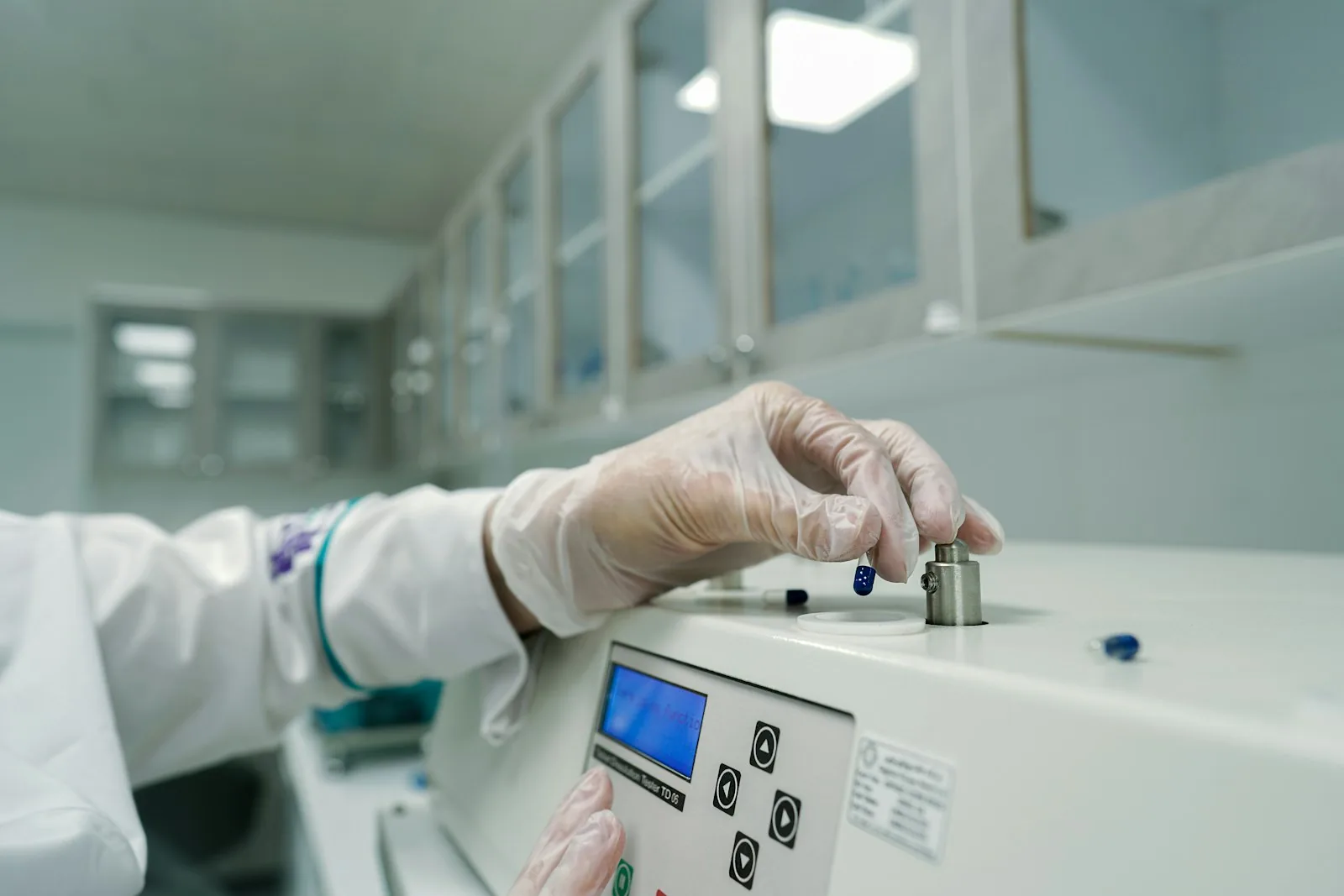
For pharmaceutical procurement professionals, analytical testing is more than a quality checkpoint — it's the foundation of product safety, regulatory compliance, and manufacturing reliability. Yet many procurement teams evaluate chemical purchases primarily on price and availability, treating certificates of analysis as paperwork rather than critical quality intelligence. Understanding the key analytical methods and what they reveal empowers buyers to make better sourcing decisions and hold suppliers to meaningful quality standards.
High-Performance Liquid Chromatography (HPLC)
HPLC remains the single most important analytical technique in pharmaceutical quality control and a cornerstone of analytical services. It separates, identifies, and quantifies individual components within a mixture by pushing a liquid sample through a column packed with solid adsorbent material under high pressure. The differential interaction between analytes and the stationary phase causes compounds to elute at different times, producing a chromatogram that serves as a chemical fingerprint of the sample.
Reverse-Phase vs. Normal-Phase HPLC
The two most common HPLC modes differ fundamentally in how they separate compounds. Reverse-phase HPLC (RP-HPLC) uses a nonpolar stationary phase — typically C18 or C8 bonded silica — with a polar aqueous-organic mobile phase.
This is the default mode for most pharmaceutical analyses because the majority of drug substances and intermediates are moderately polar organic molecules that separate well under these conditions. Roughly 80-90% of pharmaceutical HPLC methods use reverse-phase conditions.
Normal-phase HPLC reverses this arrangement, using a polar stationary phase (bare silica or bonded amino/cyano phases) with a nonpolar organic mobile phase like hexane or heptane. Normal-phase is preferred for separating structural isomers, chiral compounds (when paired with chiral stationary phases), and highly lipophilic molecules that elute too quickly under reverse-phase conditions.
HPLC Detectors and What They Reveal
The choice of detector determines what information you can extract from an HPLC separation:
- UV-Vis Detector — The most common detector, measuring absorbance at specific wavelengths. Useful for any compound with a chromophore (aromatic ring, conjugated double bonds, carbonyl groups). Diode array detectors (DAD/PDA) capture the full UV-Vis spectrum at each time point, providing spectral identity confirmation alongside quantitation.
- Refractive Index (RI) Detector — A universal but less sensitive detector that measures changes in refractive index. Used for compounds lacking UV chromophores, such as sugars, polymers, and some aliphatic intermediates. Sensitivity is typically 100-1,000x lower than UV detection.
- Fluorescence Detector — Offers 10-100x greater sensitivity than UV for naturally fluorescent compounds or those derivatized with fluorescent tags. Common in trace-level impurity analysis and bioanalytical applications.
- Evaporative Light Scattering Detector (ELSD) — Detects any nonvolatile analyte regardless of chromophore. Particularly useful for lipids, surfactants, and carbohydrate analysis where UV response is poor.
- Mass Spectrometric Detector (LC-MS/MS) — Provides molecular weight and structural fragmentation data alongside chromatographic separation. The gold standard for impurity identification, degradation product characterization, and trace-level quantitation. Triple-quadrupole MS/MS systems routinely achieve detection limits in the low parts-per-billion range.
When evaluating an HPLC result on a Certificate of Analysis, pay attention to the method details. A purity of 99.5% by HPLC at 210 nm tells a different story than 99.5% at 254 nm — shorter detection wavelengths are more universal and more likely to detect structurally diverse impurities.
Gas Chromatography-Mass Spectrometry (GC-MS)
GC-MS is the technique of choice when your analytes are volatile or semi-volatile. It combines gas chromatographic separation with mass spectrometric detection, providing both quantitation and definitive structural identification through fragmentation patterns.
When to Use GC-MS vs. HPLC
The decision between GC-MS and HPLC comes down to volatility and thermal stability. GC-MS is preferred for residual solvent analysis (ICH Q3C), volatile organic impurities, essential oils, and small nonpolar molecules with boiling points below roughly 300 degrees Celsius. Compounds must survive vaporization without decomposition. HPLC is the better choice for thermally labile compounds, large molecules (MW > 500), highly polar species, and ionic compounds.
For pharmaceutical buyers — whether sourcing from a chemical catalog or through custom synthesis — GC-MS is most commonly encountered in residual solvent testing. ICH Q3C classifies solvents into three classes based on toxicity: Class 1 solvents (benzene, carbon tetrachloride) should be avoided entirely, Class 2 solvents (methylene chloride, acetonitrile, methanol) have concentration limits ranging from 50 to 8,880 ppm depending on the solvent, and Class 3 solvents (ethanol, acetone, ethyl acetate) are considered low-risk with a general limit of 5,000 ppm. A headspace GC-MS method is the standard approach for screening all three classes simultaneously.
Nuclear Magnetic Resonance (NMR) Spectroscopy
NMR provides unparalleled structural information by exploiting the magnetic properties of atomic nuclei. Where HPLC and GC tell you how much of something is present, NMR tells you exactly what it is at the molecular level.
1H NMR vs. 13C NMR
Proton (1H) NMR is the most commonly run experiment and provides information about the hydrogen environment within a molecule. Chemical shift values indicate the electronic environment of each proton (aromatic, aliphatic, adjacent to electronegative groups), coupling patterns reveal connectivity between neighboring protons, and integration ratios confirm the relative number of protons in each environment.
A well-resolved 1H NMR spectrum can confirm molecular identity in minutes.
Carbon-13 (13C) NMR provides complementary information about the carbon skeleton. Because 13C has only 1.1% natural abundance, sensitivity is roughly 6,000x lower than 1H, requiring more sample and longer acquisition times.
However, 13C NMR is invaluable for confirming the number and types of carbon atoms, distinguishing between regioisomers, and identifying carbonyl, aromatic, and aliphatic carbon environments. DEPT (Distortionless Enhancement by Polarization Transfer) experiments further classify carbons as CH3, CH2, CH, or quaternary.
For procurement purposes, an NMR spectrum accompanying a CoA provides strong evidence of structural identity. If your supplier provides both 1H and 13C NMR data consistent with the target structure, you have high confidence that the material is what they claim it to be.
ICP-MS and ICP-OES for Elemental Impurities
Inductively Coupled Plasma techniques are essential for detecting and quantifying trace metal contamination in pharmaceutical materials, a requirement formalized by ICH Q3D.
ICP-MS (Mass Spectrometry) offers detection limits in the sub-parts-per-billion range and is the technique of choice for the 24 elemental impurities specified in ICH Q3D. It can simultaneously quantify elements like palladium (from catalytic hydrogenation), lead, arsenic, mercury, and cadmium at the trace levels required by regulatory guidelines.
Permitted daily exposure (PDE) limits vary by element and route of administration — for example, oral PDE for palladium is 100 micrograms/day, while inhalation PDE is only 10 micrograms/day.
ICP-OES (Optical Emission Spectroscopy) offers slightly higher detection limits (low parts-per-billion to parts-per-million) but is less susceptible to matrix interferences and better suited for samples with high dissolved solids. It is preferred for screening applications and for elements present at higher concentrations where MS-level sensitivity is unnecessary.
Karl Fischer Titration for Water Content
Water content determination by Karl Fischer titration is one of the most critical quality tests for pharmaceutical chemicals. Even trace moisture can accelerate degradation, affect crystallinity, alter dissolution behavior, and compromise long-term stability.
Two variants exist: volumetric Karl Fischer (suitable for water content above 0.1% by weight, with a typical range of 0.1-100%) and coulometric Karl Fischer (suitable for trace moisture from 1 ppm to about 5%, with greater precision at low levels). The technique is highly specific for water, unlike loss-on-drying (LOD) methods that measure all volatiles. If a CoA reports moisture by LOD rather than Karl Fischer, the result may overestimate water content by including residual solvents — or underestimate it if volatile impurities mask the water loss.
Thermal Analysis: DSC, TGA, and XRD
Differential Scanning Calorimetry (DSC)
DSC measures heat flow as a function of temperature, revealing thermal transitions such as melting points, glass transitions, crystallization events, and polymorphic transformations. For pharmaceutical buyers, the most important DSC application is polymorph identification. Many drug substances exist in multiple crystalline forms (polymorphs) with different melting points, solubilities, and bioavailabilities. A DSC thermogram showing the correct melting onset temperature and enthalpy of fusion confirms the desired polymorph is present.
Thermogravimetric Analysis (TGA)
TGA measures weight loss as a sample is heated, identifying desolvation events, decomposition temperatures, and volatile content. It complements Karl Fischer by distinguishing water loss from other volatile losses and helps establish processing temperature limits for thermally sensitive materials.
X-Ray Diffraction (XRD)
Powder X-ray diffraction provides a definitive fingerprint of crystalline form. Each polymorph produces a unique diffraction pattern that serves as an unambiguous identifier. XRD is the regulatory gold standard for polymorph identification in drug substance specifications and is required in many regulatory filings. If you are purchasing a compound where polymorphism is a known concern — and this includes many common APIs and intermediates — requesting XRD data alongside DSC provides the strongest possible polymorph confirmation.
How to Read a Certificate of Analysis
A Certificate of Analysis (CoA) is only useful if you know how to interpret it critically. Beyond simply checking that results fall within specification, look for these key elements:
- Lot or batch number — This must correspond to the specific material you received. A CoA for a different lot is meaningless for quality assurance.
- Test date — Results should be recent enough to reflect the material’s current quality. For hygroscopic or unstable materials, results more than a few months old may no longer be representative.
- Specification limits — These should align with the pharmacopeia or your agreed-upon specifications. A supplier reporting to internal specifications rather than USP or EP limits may be using looser acceptance criteria.
- Actual results vs. limits — A result of 99.0% purity against a specification of “not less than 98.0%” passes — but barely. Trending analysis across multiple lots can reveal whether quality is improving, declining, or consistent.
- Method references — Results should cite specific method identifiers (e.g., “USP <621> Method A” or an internal SOP number). Vague method descriptions like “HPLC” without further detail are a red flag.
What “Purity” Actually Means
The word “purity” on a CoA can mean several different things, and confusing them leads to costly misunderstandings.
- Area percent (area%) — Calculated from the chromatographic peak area of the main component divided by the total peak area. This is a relative measure and assumes all components have similar detector response factors, which is rarely true. Area% tends to overstate purity because impurities with weak UV chromophores may go undetected.
- Weight-by-weight percent (w/w%) — A true mass-based assay, usually determined by titration or quantitative HPLC against a certified reference standard. This is the most accurate measure of actual content.
- Assay by specific method — Some pharmacopeial monographs define assay methods (e.g., potentiometric titration) that report content as a percentage on a specific basis (anhydrous, dried, as-is). The basis of calculation matters enormously — a result of 99.5% on an anhydrous basis may correspond to only 97% on an as-is basis for a material containing 2.5% water.
Always confirm which measure of purity is being reported and on what basis. If your specifications require w/w% purity and your supplier reports area%, you are comparing different quantities.
ICH Impurity Thresholds
ICH Q3A establishes reporting, identification, and qualification thresholds for impurities in new drug substances based on the maximum daily dose:
- Reporting threshold — 0.05% for doses up to 2 g/day; 0.03% for doses above 2 g/day. Any impurity above this level must be reported on the CoA.
- Identification threshold — 0.10% for doses up to 2 g/day (scaling down to 0.05% for high-dose drugs). Impurities above this level must be structurally identified.
- Qualification threshold — 0.15% for doses up to 2 g/day (scaling down to 0.05% for very high-dose drugs). Impurities above this level must be qualified through toxicological evaluation.
For pharmaceutical intermediates, these thresholds guide how rigorous impurity testing needs to be. Materials destined for final API synthesis steps require tighter impurity control than early-stage intermediates, because impurities introduced late in the synthesis are more likely to carry through into the final product.
Pharmacopeia Differences: USP, EP, and JP
The three major pharmacopeias — United States Pharmacopeia (USP), European Pharmacopoeia (EP), and Japanese Pharmacopoeia (JP) — share the same goal of ensuring pharmaceutical quality, but their specific requirements frequently differ in ways that matter for procurement:
- Monograph coverage — Not all compounds have monographs in all three pharmacopeias. Some monographs exist only in one or two.
- Test methods — Even when the same test is required, the specific methodology may differ. An HPLC method in USP and EP for the same compound may use different columns, mobile phases, or detection wavelengths.
- Acceptance criteria — Specification limits for the same test can differ between pharmacopeias. A material that passes EP specifications may fail USP specifications or vice versa.
- Impurity profiles — Specified impurities (those individually named and limited) often differ between pharmacopeias, reflecting different synthesis routes common in different markets.
If you are sourcing material for a product registered in multiple markets, confirm that testing covers all applicable pharmacopeias. Specifying “USP grade” for a product destined for the European market may leave you with gaps in EP-required testing.
Method Validation Parameters
When a supplier says their analytical method is “validated,” this should mean they have established specific performance characteristics per ICH Q2(R1):
- Accuracy — How close the measured value is to the true value, typically demonstrated by recovery studies at 80%, 100%, and 120% of nominal concentration. Acceptable recovery is generally 98-102% for assay methods.
- Precision — The agreement between replicate measurements. Repeatability (same analyst, same day) and intermediate precision (different analysts, different days) should show relative standard deviation (RSD) below 1-2% for assay methods.
- Specificity — The ability to measure the analyte in the presence of other components (impurities, degradation products, excipients). Demonstrated through forced degradation studies.
- Linearity — A proportional relationship between analyte concentration and detector response across the working range, typically established across 5 or more concentration levels.
- Limit of Detection (LOD) — The lowest concentration that can be reliably detected (typically signal-to-noise ratio of 3:1). Critical for impurity methods.
- Limit of Quantitation (LOQ) — The lowest concentration that can be accurately quantified (typically signal-to-noise ratio of 10:1). This should be below the ICH reporting threshold for the intended application.
- Robustness — The method’s ability to remain unaffected by small, deliberate changes in parameters (column temperature, flow rate, mobile phase composition).
If you are evaluating a new supplier — or choosing a custom synthesis partner — requesting method validation summaries provides direct insight into the rigor of their analytical program.
Red Flags on a Certificate of Analysis
Certain patterns on a CoA should prompt further investigation before accepting a shipment:
- Rounded or suspiciously consistent results — If every lot shows exactly 99.9% purity, the testing may lack the sensitivity to detect real variation, or results may be rounded or selected.
- Missing method details — A CoA that lists results without referencing specific analytical methods or standard operating procedures lacks traceability.
- No individual impurity data — Reporting only total impurities without listing individual specified and unspecified impurities hides potentially critical information.
- Test date significantly after manufacturing date — While not always problematic, a large gap may indicate the material was retested after an initial failure.
- Specifications that exactly match results — If the specification range is unusually narrow and results always fall squarely within it, the specifications may have been written around the results rather than the other way around.
- Inconsistent units or significant figures — These suggest a lack of attention to detail in the analytical program.
- No reference to pharmacopeial standards — For materials intended for pharmaceutical use, testing against recognized standards (USP, EP, JP) is expected. Purely internal specifications may not meet regulatory requirements.
Frequently Asked Questions
What is the most important analytical test on a Certificate of Analysis?
HPLC purity testing is generally the most critical analytical test for pharmaceutical chemicals. It quantifies the main component and detects related-substance impurities that could affect product safety and efficacy. However, no single test tells the full story — a comprehensive CoA should include identity confirmation (NMR or IR), residual solvent analysis (GC), and water content (Karl Fischer) alongside purity data.
How do I know if my supplier’s CoA is reliable?
Look for specific method references (e.g., “USP <621> Method A”), individual impurity data rather than just total impurities, and actual results that show normal batch-to-batch variation. Red flags include suspiciously consistent results across all lots, missing method details, and specifications that appear written around the results. Requesting a second-source verification through an independent analytical lab is the most definitive way to validate a supplier’s claims.
What is the difference between area% purity and w/w% purity?
Area% purity is a relative measure calculated from chromatographic peak areas and assumes all components have similar detector response — which is rarely true. Weight-by-weight (w/w%) purity is a true mass-based assay determined against a certified reference standard, providing the most accurate measure of actual content. Always confirm which measure your supplier reports, as a material showing 99.5% area% purity may test significantly lower by w/w% assay.
When should I request ICP-MS testing for elemental impurities?
ICP-MS testing is required when your material falls under ICH Q3D guidelines — which applies to drug substances and excipients used in pharmaceutical products. It is especially important when the synthesis route involves transition metal catalysts (such as palladium from catalytic coupling reactions), or when the material will be used in parenteral or inhalation formulations where permitted daily exposure limits are significantly lower than for oral products.
How often should Certificates of Analysis be retested for stored materials?
Retesting frequency depends on the material’s stability profile and storage conditions. For hygroscopic or light-sensitive compounds, retesting every 6 to 12 months is common practice. Stable materials stored under recommended conditions may have retest periods of 2 to 3 years. If a CoA test date is significantly older than the material’s established retest period, request fresh analytical data before accepting the shipment.
How ChemContract Supports Analytical Quality
ChemContract’s analytical services are designed to give procurement teams the confidence that results are accurate, traceable, and regulatory-ready. Our laboratory is equipped with modern HPLC, GC-MS, NMR, ICP-MS, Karl Fischer, DSC, TGA, and XRD instrumentation, and all methods are validated per ICH Q2(R1) guidelines. Every Certificate of Analysis includes full method references, individual impurity data, and specification bases — because transparency is the foundation of trust.
For novel compounds or custom intermediates, ChemContract offers method development and validation services as part of our contract R&D programs, ensuring that fit-for-purpose analytical methods are in place before production begins. We also support method transfer to client laboratories, providing the documentation and technical collaboration needed to replicate validated methods at receiving sites. When your analytical questions go beyond routine testing, our team of experienced analytical chemists is available for consultation on method selection, specification setting, and regulatory strategy.
Key Takeaway
Analytical testing is not a commodity — the quality of the analysis is just as important as the quality of the chemical being tested. Procurement teams that invest in understanding analytical methods make better sourcing decisions, identify quality issues earlier, and build stronger relationships with suppliers who share their commitment to analytical rigor.
Get Custom Synthesis from mg to Multi-Ton
From route design to commercial delivery — our 500+ scientists handle the chemistry so you can focus on your pipeline.